
Are you a criminology student eager to kickstart your career with an internship? Crafting a standout application letter is your first step towards landing that dream position! In this article, we'll explore essential tips and a sample template to help you effectively showcase your skills and passion for the field. So, if you're ready to take your application to the next level, keep reading!

Image cover: Letter Template For Internship Application Criminology Student
Letter Template For Internship Application Criminology Student Samples

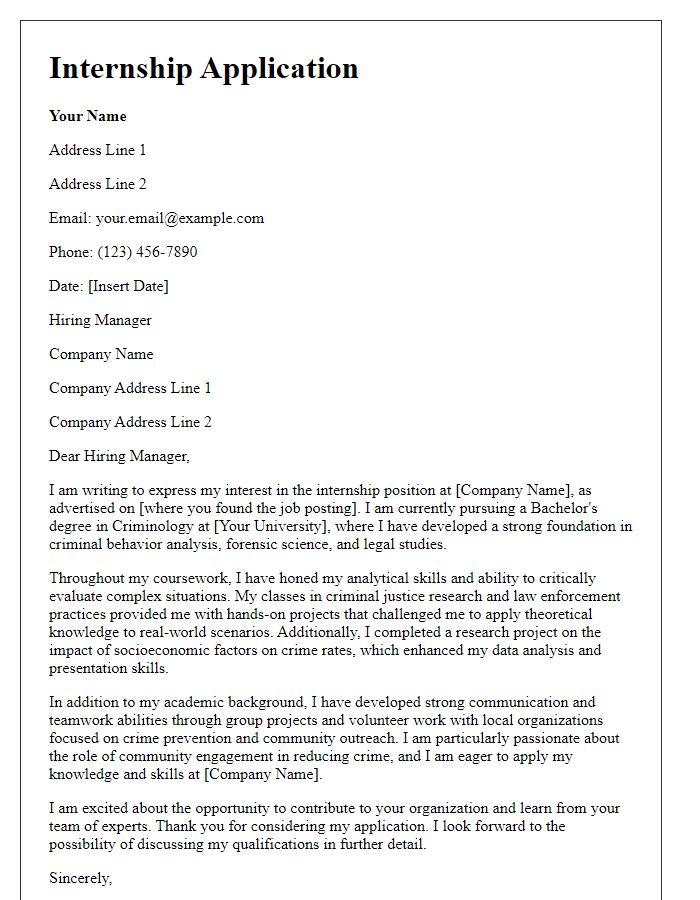
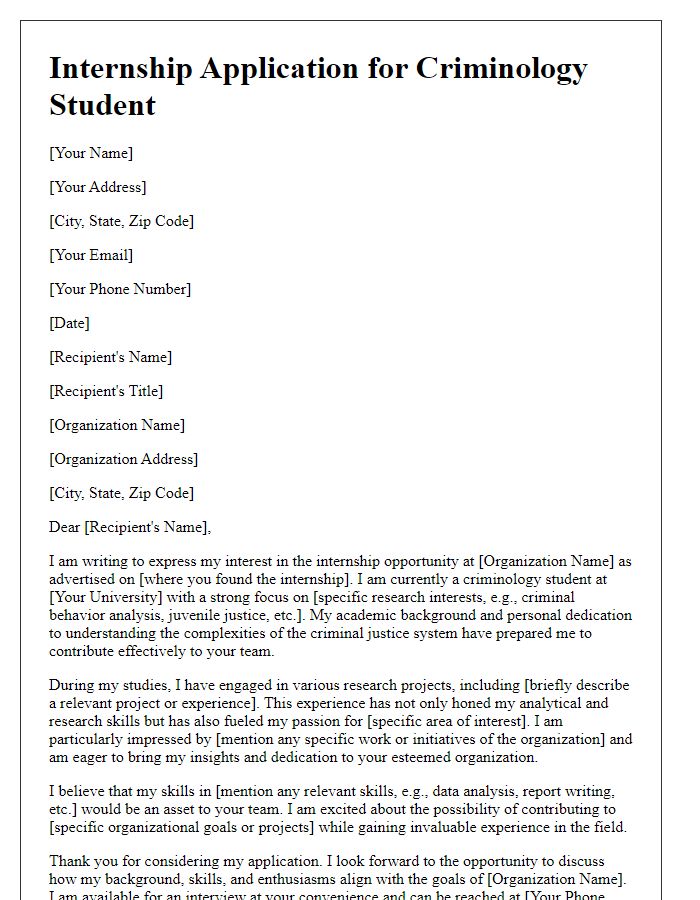
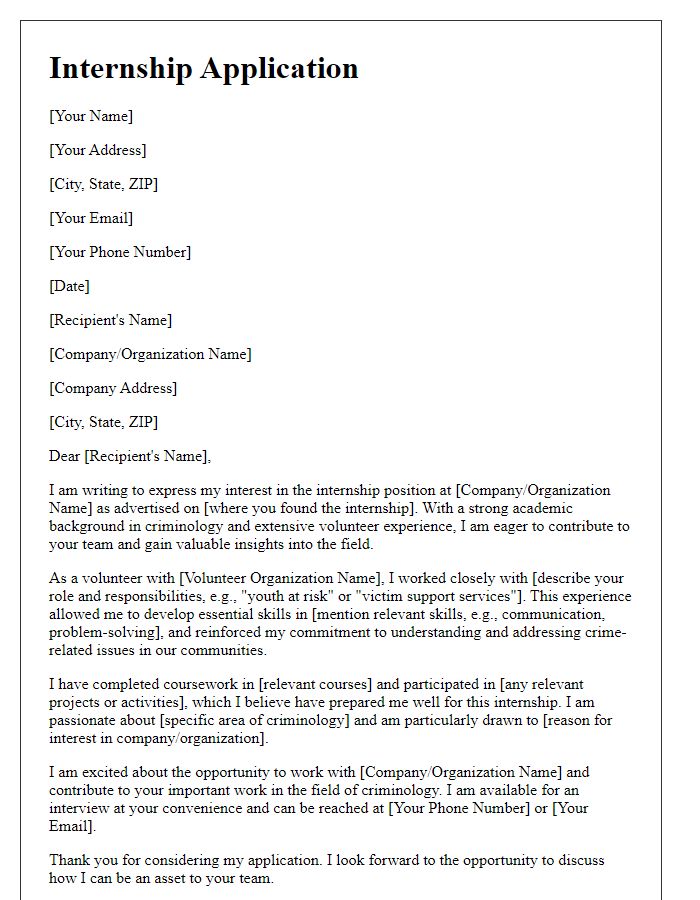
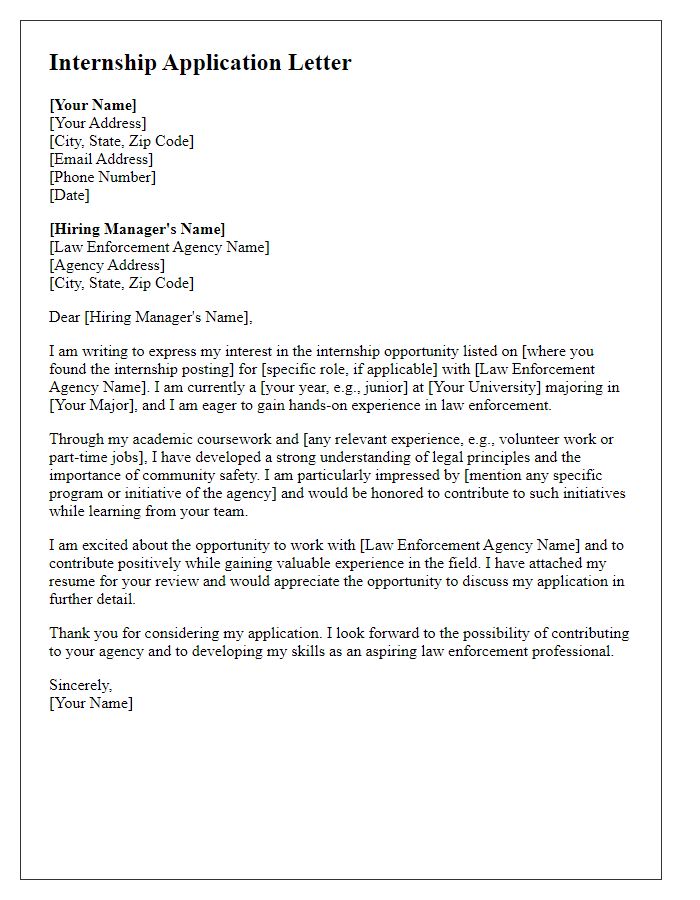
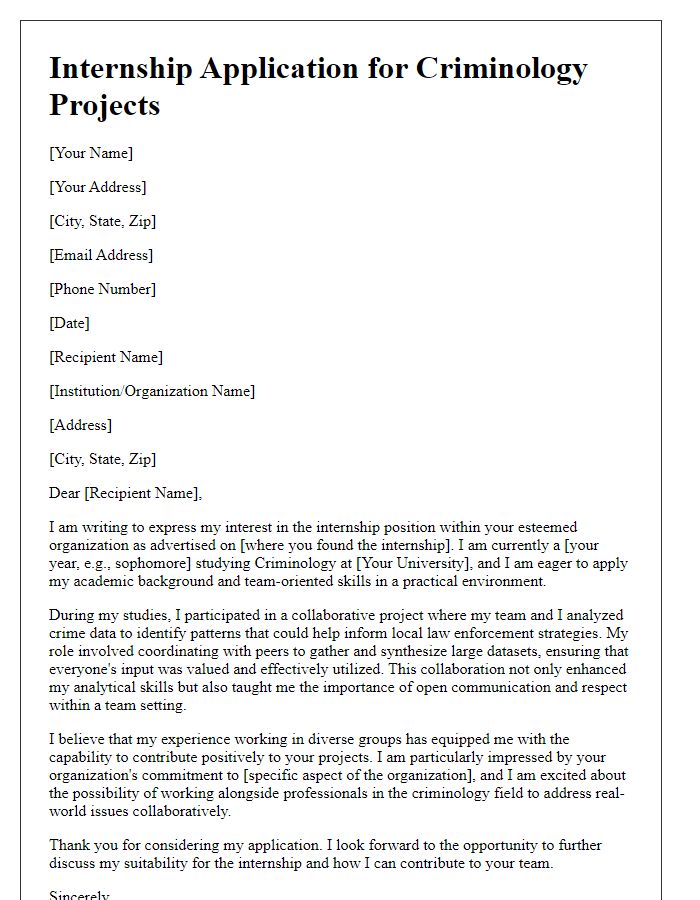
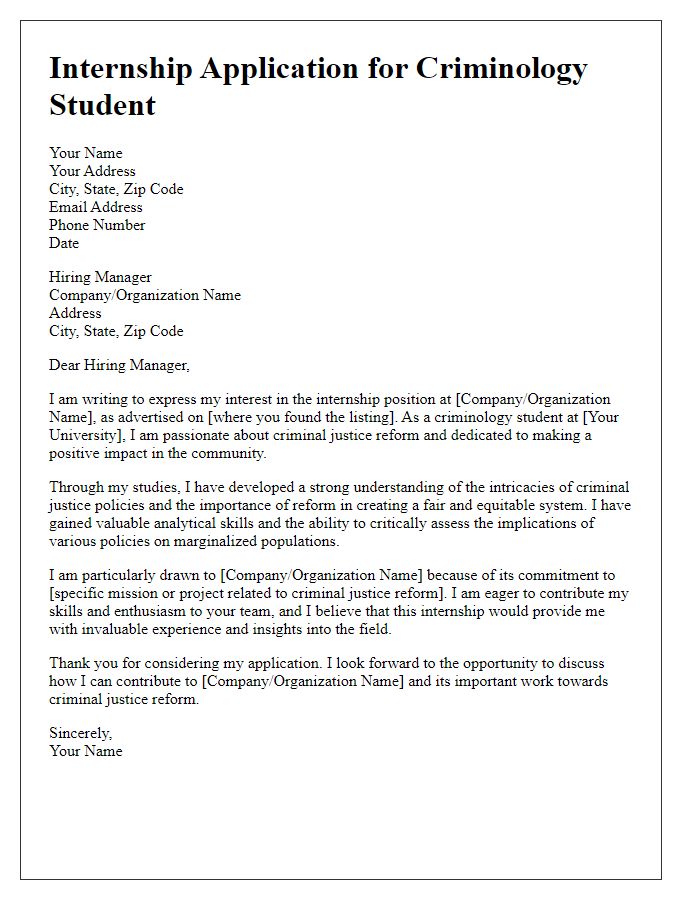
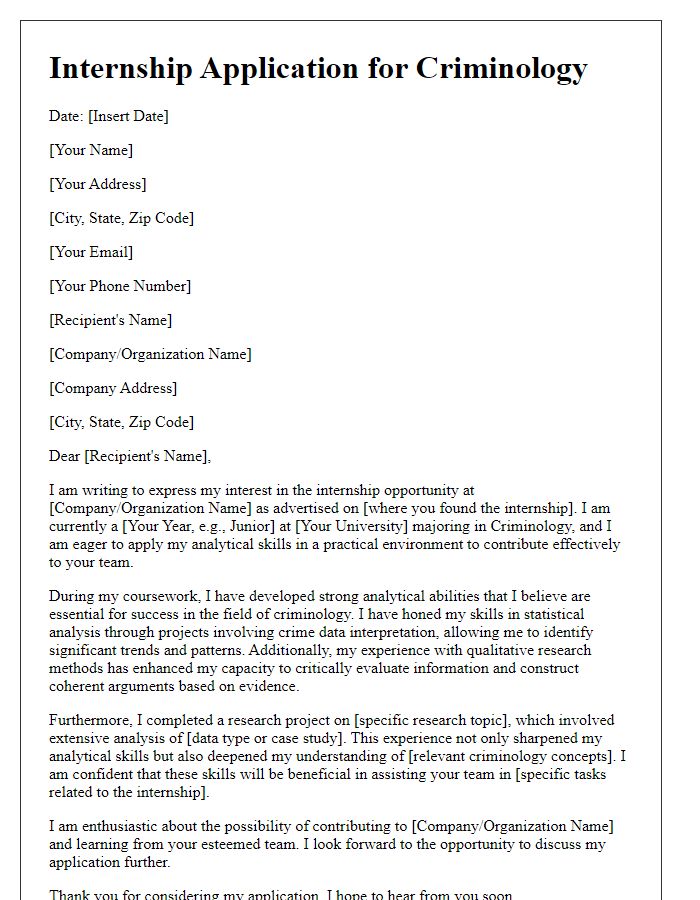
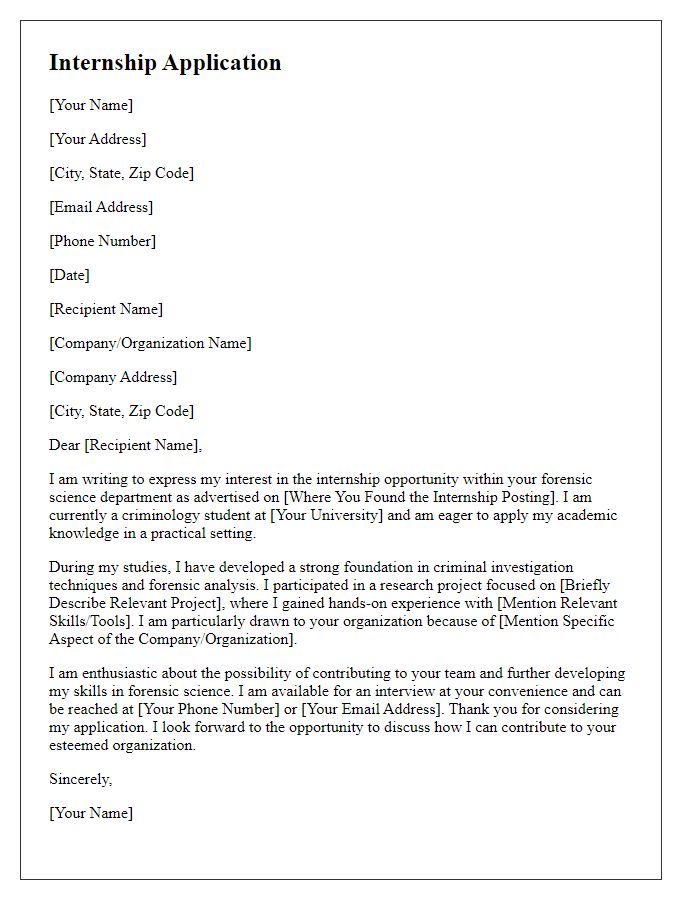
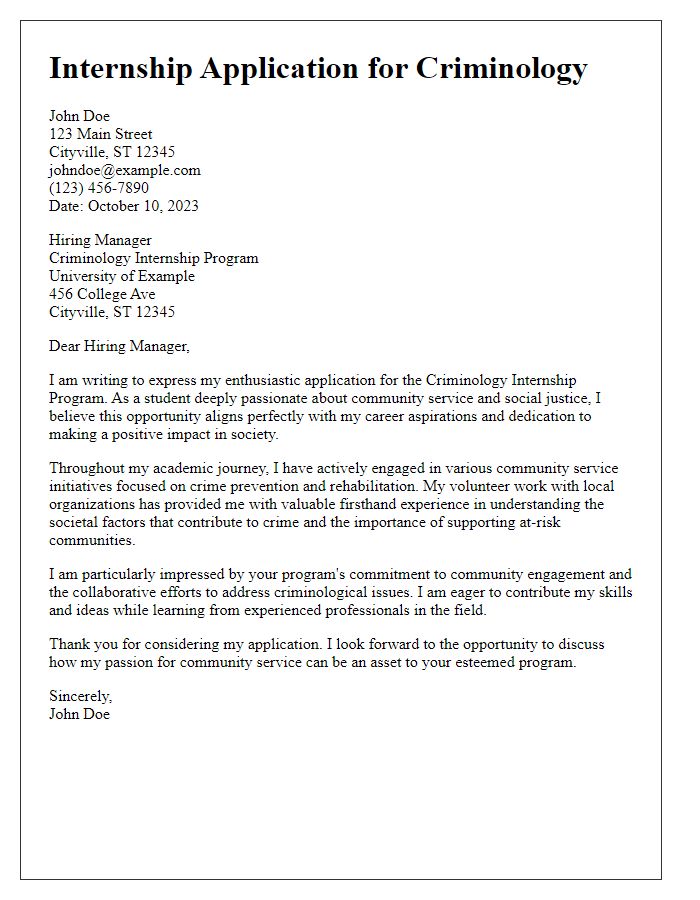
Applicant's contact information
A compelling internship application can set the stage for a successful career in criminology, particularly for enthusiastic students eager to gain field experience. Essential components include relevant contact information such as a full name reflecting personal identity, an accurate email address offering a direct line of communication, and a phone number ensuring immediate reachability. Additionally, including a physical address can be beneficial for organizations in assessing local candidates or for future correspondence. This foundational data, presented clearly at the top of the application, reinforces professionalism and allows potential employers to easily navigate the applicant's details.
Recipient's contact information
An internship application allows a criminology student to showcase qualifications and experience to a potential employer, such as a law enforcement agency or research institution. The recipient's contact information includes essential details for proper addressing, typically comprising the recipient's name, title, organization name, street address, city, state, and ZIP code. It provides clarity in communication, ensuring the application reaches the intended person, possibly within a large organization, like the Federal Bureau of Investigation or a local police department. Including the date of application is also critical as it establishes a timeline for potential responses.
Strong introduction statement
As a dedicated criminology student at [University Name], with a solid foundation in criminal justice theories and practical research methodologies, I am eager to apply my knowledge and passion for criminology in a hands-on internship. My academic journey has equipped me with critical analytical skills and a profound understanding of criminal behavior and the justice system, making me an ideal candidate for this opportunity. I am particularly interested in [specific area of interest, such as forensic psychology, criminal profiling, or juvenile justice], and I am excited about the prospect of contributing to [specific organization's name or program], where I can gain valuable field experience while furthering my understanding of the complex dynamics within the field of criminology.
Relevant academic background
A criminology student with a strong academic foundation, specialized in understanding criminal behavior, social influences, and effective crime prevention strategies, can significantly contribute to the field. Courses such as criminal psychology, sociology of crime, and ethical issues in criminal justice provide essential insights into the complexities of the justice system. Research opportunities involving empirical studies and statistical analysis sharpen skills in critical thinking and problem-solving. Involvement with campus organizations focusing on criminal justice reform and community service enhances practical knowledge and networking capabilities. Notably, internships with law enforcement agencies, legal firms, or non-profit organizations offer real-world experience essential for applying theoretical knowledge in hands-on environments, preparing students for future roles in criminology and related fields.
Specific skills and experiences
A criminology student with strong analytical skills has gained practical experience through internships at various law enforcement agencies, such as the FBI and local police departments, focusing on criminal investigations and data analysis. Coursework included forensic psychology, criminal law, and research methodologies, which enhanced understanding of criminal behavior and legal frameworks. Participation in a research project involving crime statistics analysis within urban environments sharpened quantitative analysis abilities, while volunteer work at community outreach programs provided insights into rehabilitative practices for offenders. Proficiency in software tools like SPSS for data analysis and an understanding of criminological theory equips the student for addressing real-world challenges in criminal justice settings.
Read Also: Our Internship application's Blogs


Comments